RYA VHF

Short Range Certificate

RYA VHF

The short range certificate is the minimum qualification you need to operate a VHF radio on a UK flagged vessel.

Here at the NXT Marine you can get the RYA Marine Radio Short Range Certificate in one day at our Thameside London clubhouse. This includes a period of study and then an examination.

The NXT Marine also offers the course online, but you will still need to complete the examination at the clubhouse.

If you have completed the Short Range Certificate study component with another provider, you can still take the examination with us.

Short Range Certificate syllabus

Below you’ll find brief notes on the topics covered on the course.

Basic Features

This parts covers the range of VHF communications - in distress, search and rescue, port operations, between boats on on your own boat. You'll also discover more about the sorts of radio stations - those based on ships, coasts, ports and so on. Channels : Some VHF frequencies are designated as channels. You''l get to know these channels, how to use them and why some of them are reserved for special use.
How Radio Works

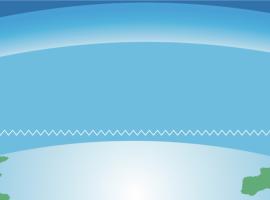
VHF is short range radio because VHF radio waves propogate is straight lines - effectively line of sight. To overcome these limitations you'll learn about antenna height on coastal stations, your own boat and even the handset you are using.
GMDSS

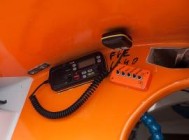
The Global Maritime Distress and Safety System is a set of safety procedures, types of equipment, and communication protocols used for safety and rescue operations of the distressed ships, boats, and aircraft. You'll learn about this system, in particular the sorts of equipment your boat may carry.
Practical knowledge of Radio Equipment

Operating a marine VHF radio

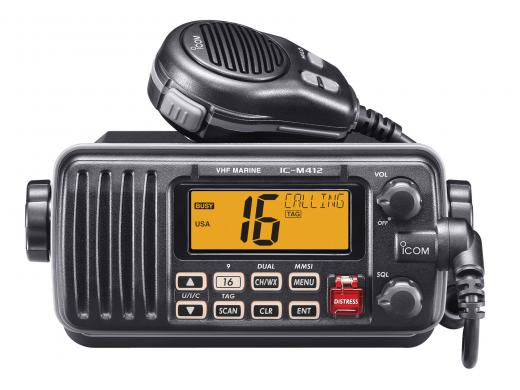
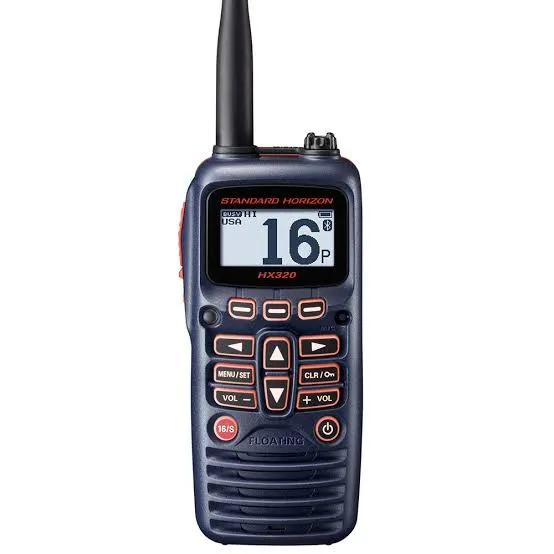
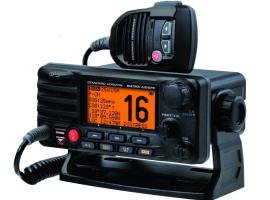
If you take our classroom course at our Thameside London clubhouse, you'll be able to use modified marine radios to help with this part of the syllabus. Radios come in all sorts of models, but all share standard controls. You'll learn about these and discover what they do.

Digital Selective Calling

VHF radios have Digital Selective Calling (DSC) built in. Instead of going through the protocols of a voice call on channel 16, you can contact  and pass various types of message to other ships or coastal stations at the press of a button. You’ll learn about how this system works, what sorts of messages you can send, and how to send them.
 

Distress procedures

You will learn to identify a distress situation and the correct voice procedures for sending and receiving distress calls.  You also need to know how to protect distress frequencies to avoid false calls and other issues.

Urgency and safety calls

You will learn to identify an urgent situation and the correct voice procedures for sending and receiving these sorts of calls. There are also safety calls that are to do with weather and navigation warnings to know about.


Frequently Asked Questions

You will require roughly 16 hours of Tuition, so both days will be nearly 8 hours long.

Standard course times are 0900 – 1700 with a lunch break of approximatley 60 minutes.

We may finish slightly earlier or later depending on conditions and student progress.

We aim to teach as much as possible outside of the classroom however there are a few hours worth of theory that we must cover. Depending on the weather, we will be out for most of the course.

Dress appropriately!

Upon course completion, you are eligible to apply for your ICC. This can be done online via the RYA website here:

https://www.rya.org.uk/knowledge/abroad/icc/icc-apply

If you attend and pass a course, your instructor will go though the process with you.

Comfortable clothing suitable for some light activity that does not restrict your movement.

We have a strict maximum limit of 3 students per course.

Courses require at least 2 students to run. 1-2-1 or private courses can be arranged.

Parking is limited unless you are a blue badge holder, please enquire when booking.

There is space for motorcycle and bicycle parking.

We have Shadwell Station (Overground & DLR) & Wapping Station (Overground) within close proximity of us.

Our high quality Spinlock lifejackets and Helly Hansen Waterproofs will be provided as part of your course fee.

Please look after them as we reserve the right to charge for damage we deem negligent/intentional.

Negligent/intentional discharge of a lifejacket will lead to a £50 fee to cover admin and re-arming costs.

If you do not meet the standard required to recieve a pass certificate, you will not fail the course. Provided you have completed the full 16 hours, we will provide an action plan you can work through to bring you up to the standard required.

You can come in another time for further practice. One of our highly experienced instructors will make it clear as to what is left to be completed.

The first hour will be free. If you need more than 1 hour extra tuition, then it will be a reduced cost of £50 per hour thereafter.

Please note, this is not a common occurence.